
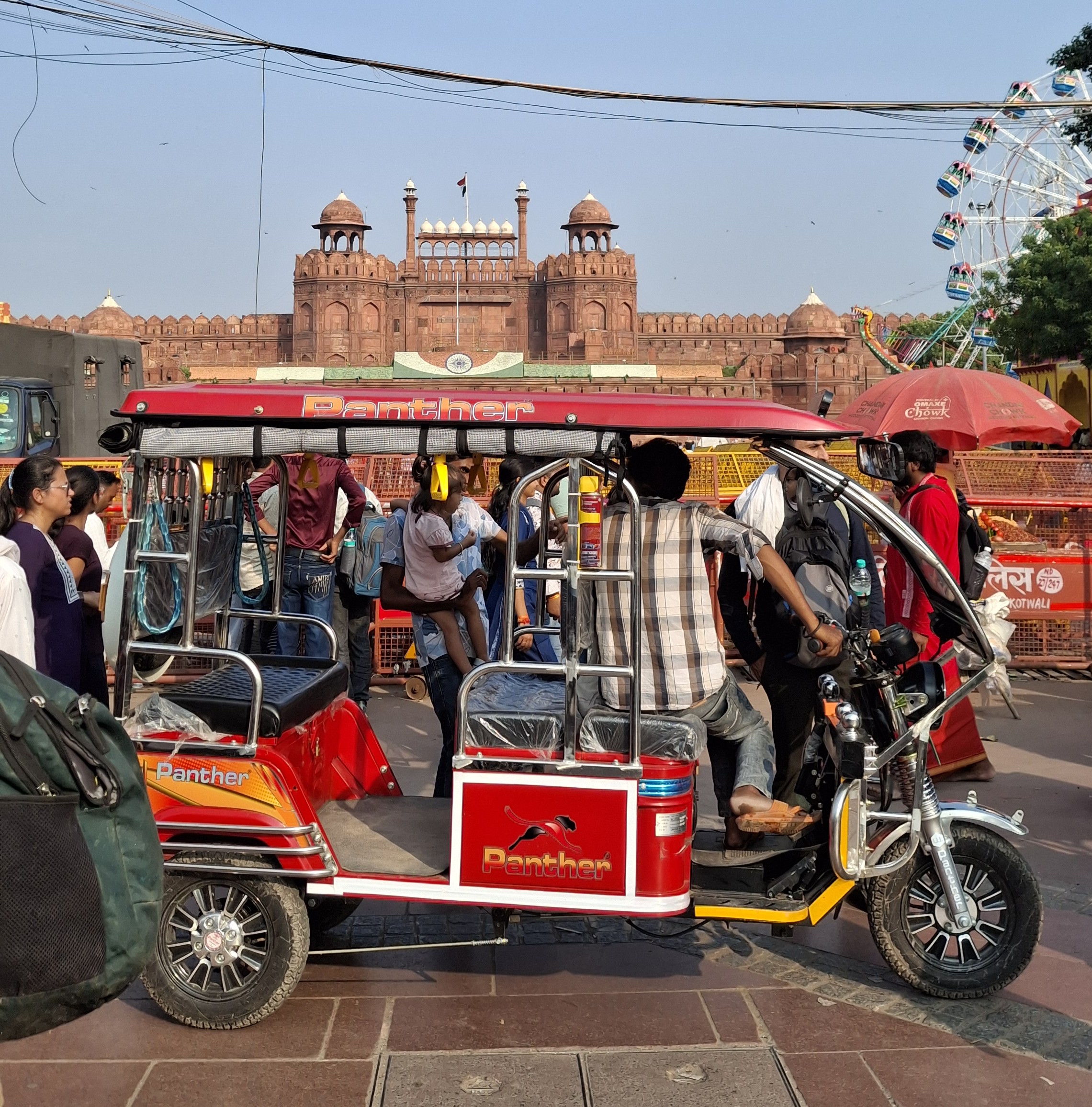
E-rickshaws have emerged as a critical component of India’s urban transport ecosystem, particularly in metropolitan regions such as Delhi, where they provide affordable, low-emission last-mile connectivity. Positioned at the intersection of climate policy, informal labour, and urban governance, e-rickshaws are increasingly promoted as instruments of sustainable mobility. However, their rapid expansion has occurred within deeply unequal socio-economic conditions, raising urgent questions about livelihood security, regulatory justice, and the inclusiveness of India’s electric mobility transition.
This report examines the role of e-rickshaws in climate change mitigation alongside the lived realities of e-rickshaw drivers in the National Capital Territory (NCT) of Delhi. Drawing on primary data collected from 71 e-rickshaw drivers across diverse high density and low-density locations, complemented by in-depth case studies and field observations, the study adopts a mixed-methods approach to analyse income patterns, expenditure burdens, social composition, working conditions, risks, and interactions with state institutions.
Findings indicate that e-rickshaw driving functions largely as a survival-based livelihood within the informal economy. Average household incomes remain modest and highly variable, while monthly expenditures related to charging, maintenance, parking, loan repayments, and daily subsistence consume a substantial share of earnings. The narrow and unstable gap between income and expenditure leaves most drivers with little or no financial surplus, exposing them to chronic indebtedness and economic shocks. Long working hours—often exceeding 10–12 hours per day—are common, yet do not translate into income security.
The socio-demographic profile of drivers reveals a strong concentration of participation from historically marginalised groups. A majority of drivers belong to OBC and Scheduled Caste categories, have low levels of formal education, and are engaged in the sector due to limited access to stable employment alternatives. Women’s participation remains extremely low, reflecting entrenched gendered barriers within urban transport work. These patterns underscore that the benefits of low-carbon mobility are being produced disproportionately by socially and economically vulnerable populations.
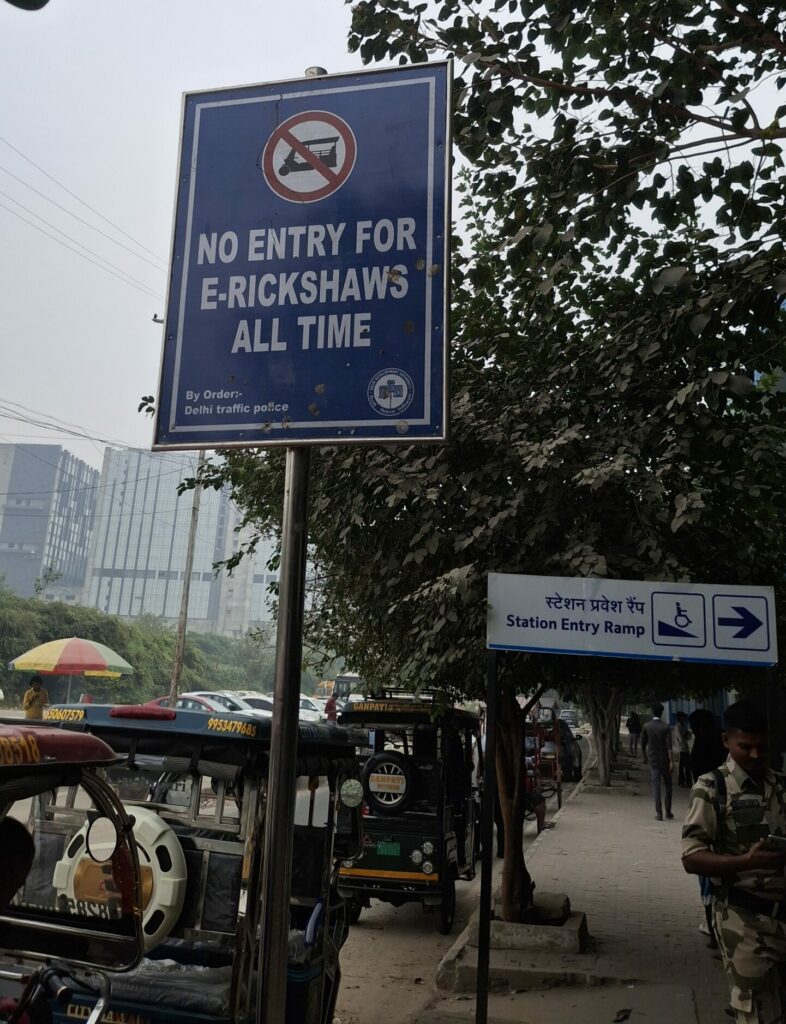
The study also highlights significant operational and institutional risks. Nearly half of surveyed drivers reported experiencing road accidents, often linked to poor road infrastructure, mixed traffic conditions, and vehicle design vulnerabilities. Theft of batteries and components is widespread, particularly in the absence of secure parking. Interactions with traffic policing emerge as a major source of economic insecurity, with a high incidence of challans—especially for “No Entry” violations—often resulting in fines that far exceed drivers’ monthly earnings. Enforcement practices are perceived as punitive, poorly communicated, and misaligned with the spatial realities of e-rickshaw operations.
While national and Delhi-level EV policies have aggressively promoted electrification, the report finds that labour and livelihood concerns of informal electric mobility workers remain largely peripheral to policy design. The transition to electric mobility, though environmentally beneficial, risks reproducing existing inequalities unless accompanied by deliberate measures to reduce operational costs, rationalise regulation, provide social protection, and improve infrastructure.
By situating e-rickshaws within a Just Transition framework, this report argues that climate-friendly transport must also be socially just. Ensuring affordable charging, secure parking, fair enforcement, access to insurance and credit, safer road infrastructure, and targeted support for marginalised groups—particularly women and migrant workers—is essential for making Delhi’s electric mobility transition inclusive and sustainable. Without such interventions, e-rickshaw drivers will continue to bear the hidden social costs of challan amounts in proportion to income levels of e-rickshaw drivers.
(Section from Excecutive Summary of the Report)
Research and Write up by Priyansh Maurya
